

October 2026
Your first drive with Hypersquare: what feels different and how quickly drivers adapt
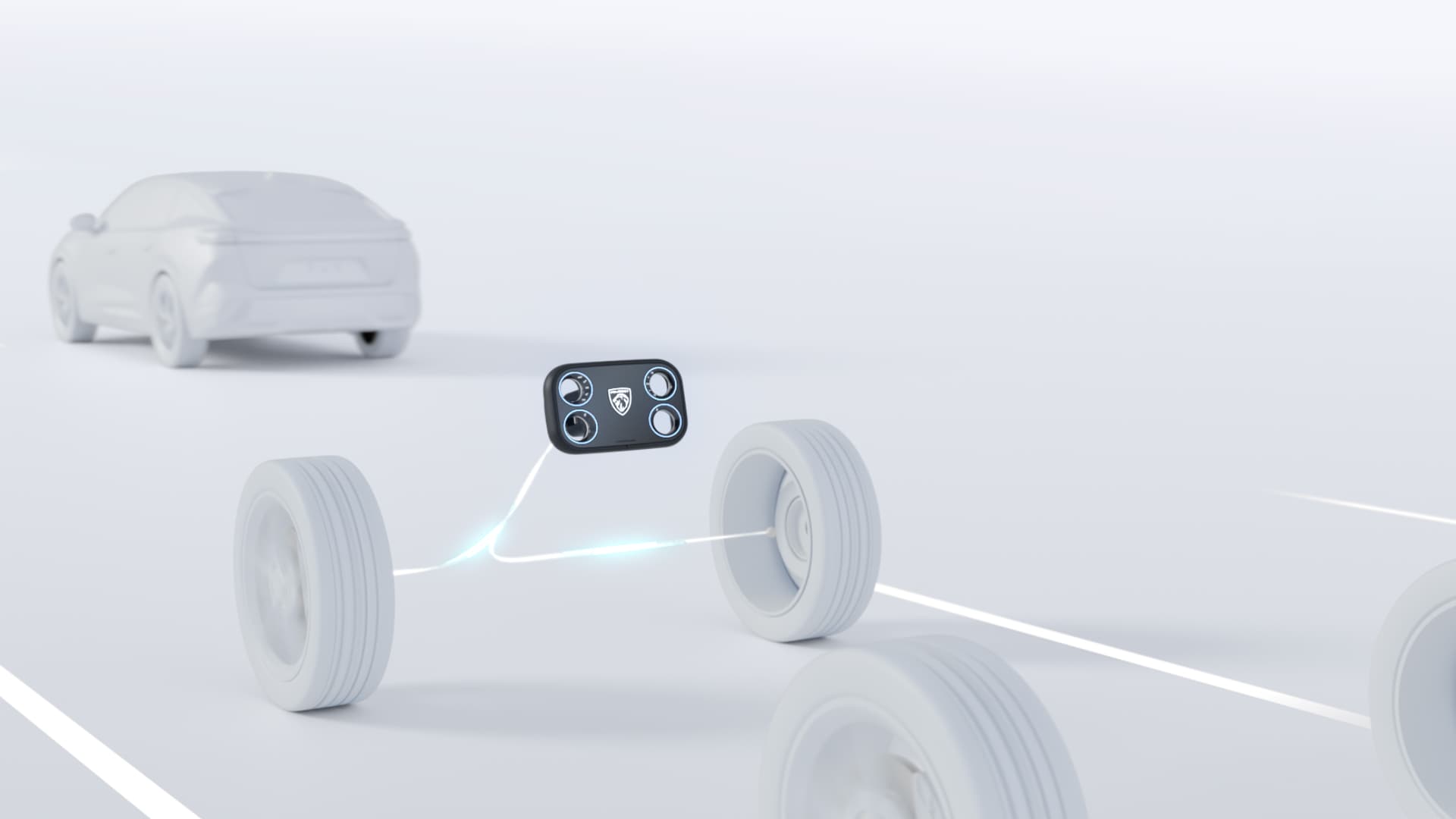
PEUGEOT Hypersquare® changes two things drivers notice immediately: the shape of the steering control and the way the reduced operating range is understood from behind the wheel. The shorter steering movement itself is made possible by PEUGEOT Steer-by-Wire technology, which continuously adapts the relationship between the driver’s input and the road-wheel angle according to vehicle speed. Together, PEUGEOT Hypersquare® and Steer-by-Wire create a new steering experience that feels direct during low-speed manoeuvres and naturally more measured and stable on faster roads.
Drivers do not have to relearn acceleration, braking, observation or road positioning.
The learning curve is focused on steering: understanding that less movement is required, avoiding unecessary hand-over-hand rotation and building confidence in a system that adapts naturally to vehicle speed. In our qualitative research, perceptions became increasingly positive throughout the test session, particularly during low-speed manoeuvres.
Driving with PEUGEOT Hypersquare®

Getting comfortable
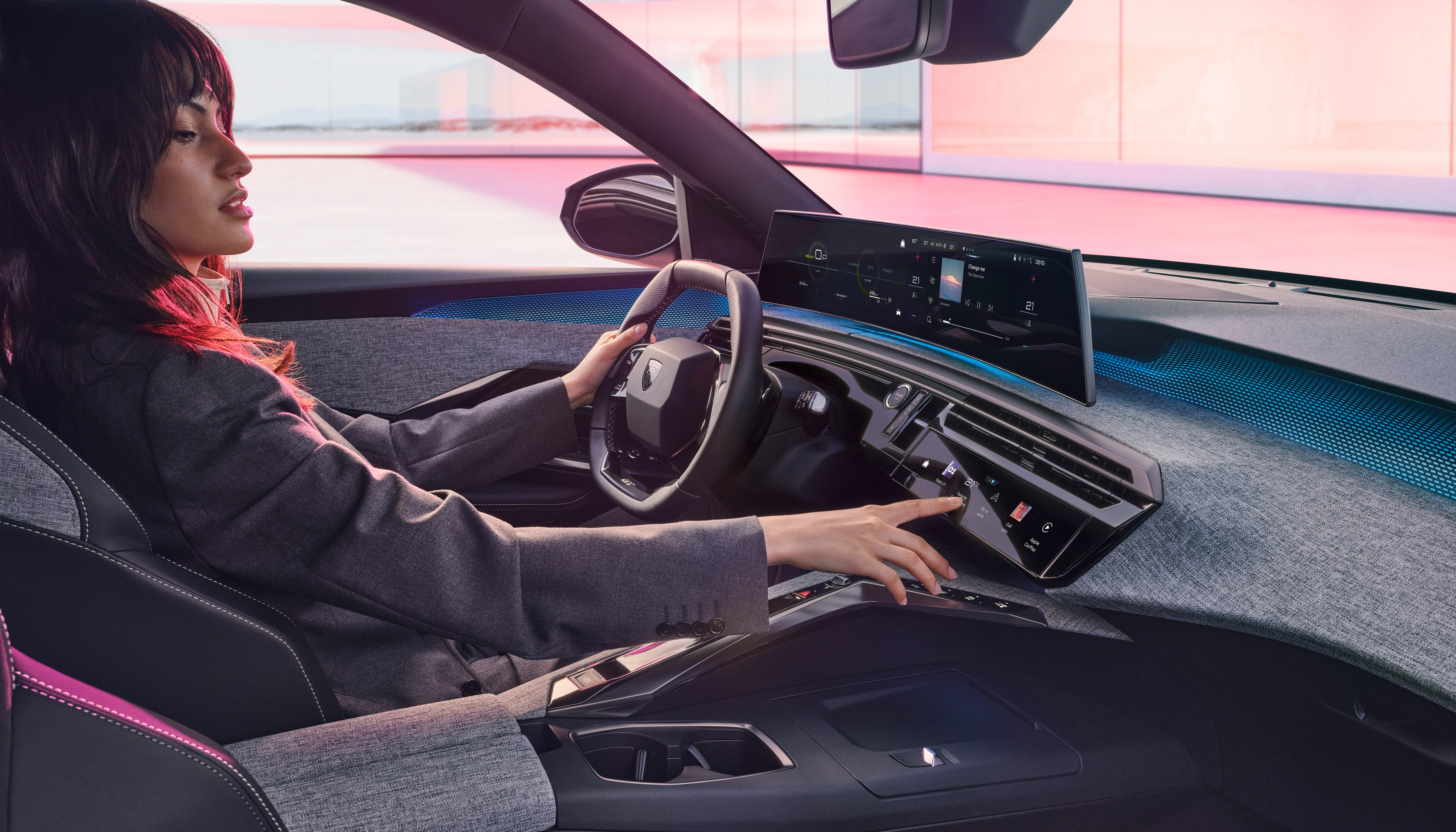
Settle into a new generation of PEUGEOT i-Cockpit® designed around a natural, stable driving position. Adjust the seat and mirrors, place both hands comfortably on the outer rim and discover key controls positioned within easy reach of the thumbs.
City driving
Discover a more agile and intuitive way to move through the city. Short steering inputs make turning left or right feel immediate, whilst the speed-adaptive response helps the vehicle follow the intended path with precision.
Parking
Turn confined spaces into shorter, more controlled steering movements. From its centred position, PEUGEOT Hypersquare® rotates by up to 170° in either direction to deliver the full steering range required for parking, significantly reducing the need for successive hand repositioning compared with a conventional steering wheel.
Motorway
Enjoy a stable, composed and precise response when the road opens up. At motorway speeds, the speed-adaptive steering ratio supports vehicle stability by translating small movements of the PEUGEOT Hypersquare® into measured and fluid trajectory corrections.
Countryside
Rediscover the pleasure of flowing from one bend to the next. On winding roads, PEUGEOT Hypersquare® responds precisely to left and right inputs whilst its speed-adaptive ratio supports smooth, progressive control.
What does PEUGEOT Hypersquare® feel like at first?
New in your hands, natural from the first turns. PEUGEOT Hypersquare® transforms steering into a shorter and more direct gesture, whilst its response evolves continuously and intuitively with the driving situation.
The first low-speed input feels more direct than with a conventional steering wheel because the Steer-by-Wire system produces the required road-wheel angle from a smaller movement of the PEUGEOT Hypersquare®. The reduced operating range removes the need for successive hand-over-hand rotations. During the tightest manoeuvres, drivers can either maintain their grip or reposition one hand, depending on the technique they find most comfortable.
As the vehicle gathers speed, the relationship between the driver’s gesture and the movement of the road wheels evolves smoothly. There is no abrupt switch between a low-speed setting and a high-speed setting. The calibration continuously adjusts in the background, making the response direct when manoeuvring and naturally more measured on faster roads. The driver does not need to manage this adaptation or change steering technique. PEUGEOT Hypersquare® remains the same intuitive control throughout the journey: precise and agile in confined spaces, progressive and stable as speed increases.
How do you hold PEUGEOT Hypersquare®?

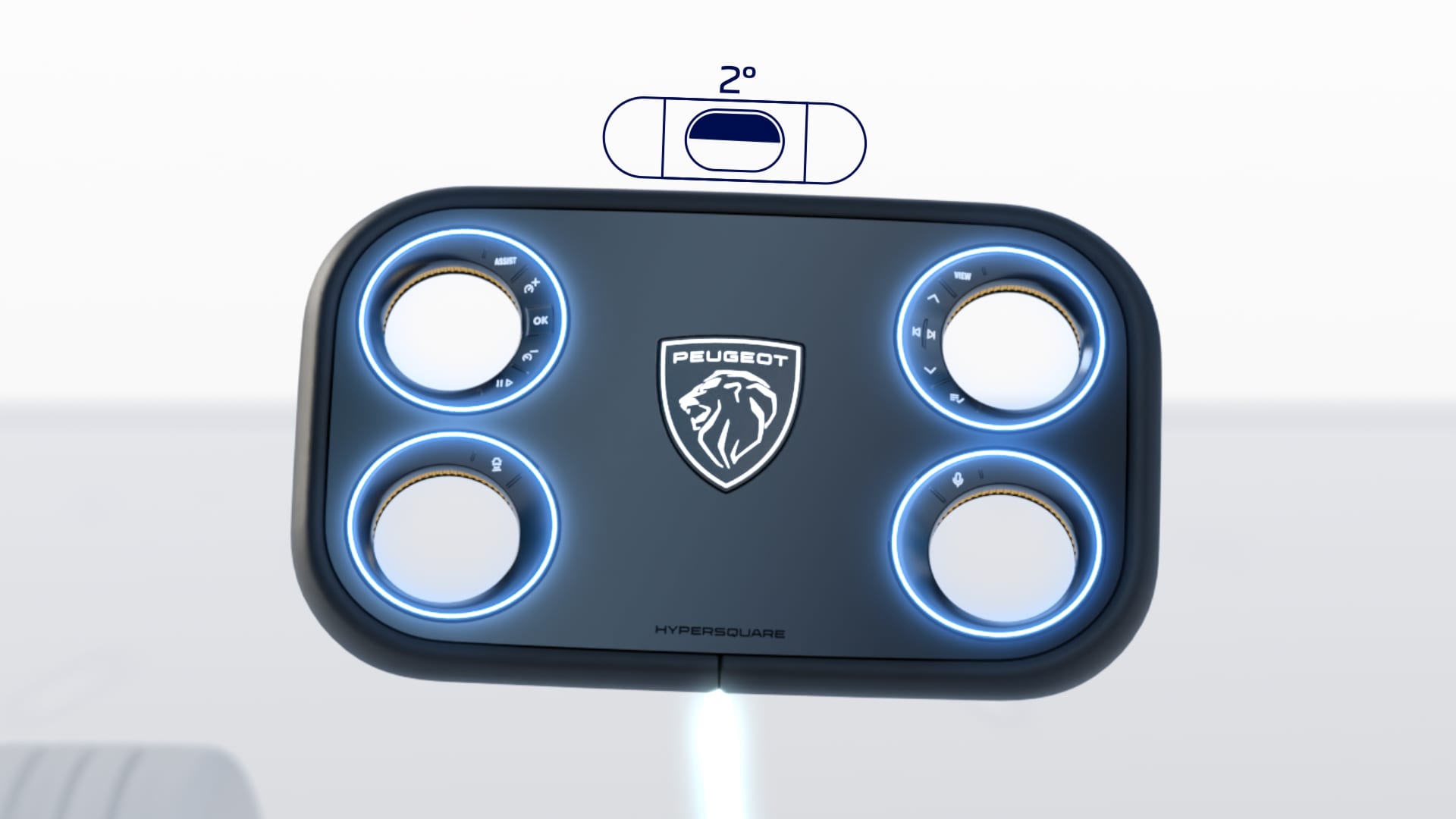
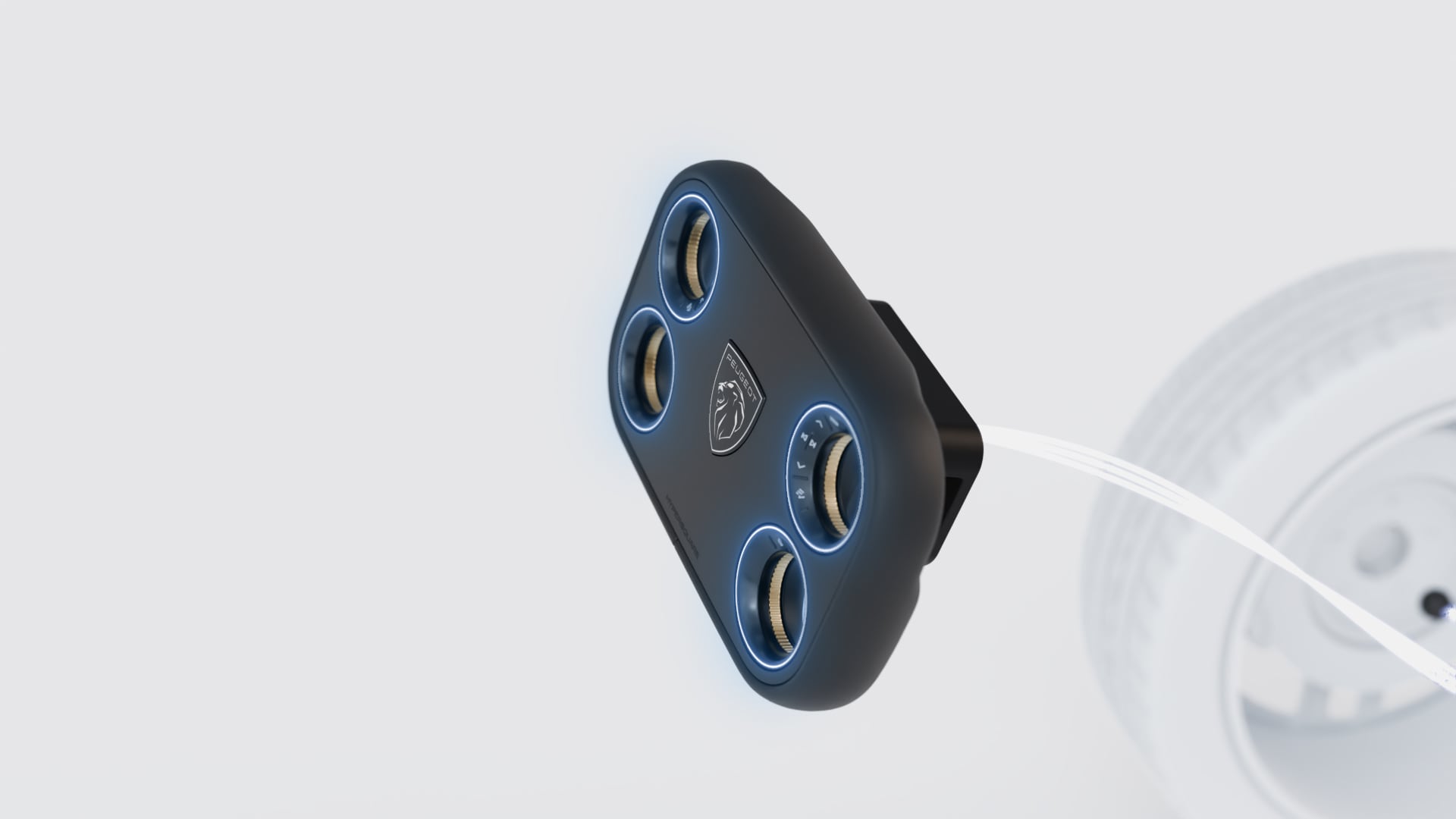
PEUGEOT Hypersquare® is designed around a stable two-handed position. Its four circular pods create clear grip and control zones, whilst key functions remain accessible to the thumbs. The reduced steering range provided by Steer-by-Wire greatly limits the need to reposition the hands during everyday driving.
The unique rectangular design moves away from the traditional clock-face reference of a round steering wheel, signalling a new steering experience that requires less rotation. During most driving situations, the hands can remain within the natural grip zones on the outer rim. When approaching the full steering range in a tight manoeuvre, drivers can either maintain their grip or reposition one hand once if this feels more comfortable than crossing the arms. The production vehicle handbook and driver guidance will remain the reference for hand placement.
This point matters for different driver profiles. A driver accustomed to a small PEUGEOT i-Cockpit® wheel may find the reduced movement easier to understand than someone who routinely uses large steering inputs. A new driver may have fewer established habits to unlearn. A driver who strongly prefers a conventional round wheel may need more time before the new control feels automatic.
Why does PEUGEOT Hypersquare® require less steering rotation?
Minimum movement delivers maximum effect. With speed-adaptive Steer-by-Wire technology, PEUGEOT Hypersquare® combines hyper-agility when manoeuvring with smooth, precise and stable control as speed increases.
A conventional power-steering system retains a mechanical link between the steering wheel and the steering rack. Its steering ratio means that some low-speed manoeuvres require the wheel to be rotated through a much wider range, with several successive hand repositioning movements.
Steer-by-Wire removes this traditional mechanical link. Sensors measure the driver’s input, electronic control functions translate it into a steering instruction, actuators move the steering rack and a separate actuator generates calibrated force feedback through PEUGEOT Hypersquare®. This electronic architecture allows the steering ratio to evolve continuously with vehicle speed.
At low speed, the road wheels can reach the required angle from a smaller steering input. As speed increases, the relationship between the driver’s movement and the road-wheel angle becomes progressively more measured to support precision and vehicle stability. This evolution happens automatically within the selected driving mode, with no need for the driver to switch manually between parking, urban and motorway settings.
The reduction in steering travel is made possible by Steer-by-Wire technology, including when it is associated with a round steering control. PEUGEOT Hypersquare® makes this new relationship between movement and response immediately visible: its distinctive geometry signals a new way of driving and helps the driver understand and adopt the shorter operating range.
How does PEUGEOT Hypersquare® change parking and U-turns?
Make tight spaces feel easier to master. Approximately half a turn in either direction replaces repeated steering-wheel rotations, keeping both hands securely in position.
Parking is the best place to experience this new relationship between movement and response. In a parallel-parking manoeuvre, the driver can apply the required road-wheel angle without rotating the steering control through several successive movements.
Drivers who are comfortable keeping both hands on PEUGEOT Hypersquare® can guide it through its full operating range without releasing the control. Others may prefer to reposition one hand once as the control approaches its maximum angle, particularly to avoid crossing the arms. Both techniques allow the driver to benefit from the reduced steering range.
The same principle applies in narrow car parks, tight streets, U-turns and roundabouts. Fewer steering movements simplify the physical sequence, but the driver must still judge space, speed and surrounding traffic. PEUGEOT Hypersquare® does not change the vehicle’s external dimensions or automatically reduce its geometric turning circle.
How long does it take to adapt to the PEUGEOT Hypersquare®?
Thrilling from the first touch. Intuitive within the first driving situations. Each turn and manoeuvre quickly builds familiarity with the shorter steering gesture.
There is no single adaptation time for every driver. There is no single adaptation time that applies to every driver. During our qualitative research, participants were observed throughout their first impressions, initial driving situations, manoeuvres and final evaluations. Results showed a clear improvement throughout the session, with the most significant gains occurring during low-speed manoeuvres. However, the findings do not support a universal adaptation time measured in seconds, minutes or kilometres.
Adaptation is likely to happen in stages:
First,
the driver recognises that less rotation is needed.
Next,
the hands stop preparing for the successive hand-over-hand movements associated with a conventional steering wheel. During tighter manoeuvres, the driver discovers whether maintaining the two-handed grip or repositioning one hand once feels more natural.
Finally,
attention shifts away from the control itself and back to the road, as it does with a familiar steering wheel.
Which drivers may need more time to adapt?
One innovation, designed around different driving habits. Whether drivers spend more time in the city or on the motorway, PEUGEOT Hypersquare® reveals its benefits progressively through real driving situations.
Experience, driving habits and expectations can all shape the first response. Drivers who frequently manoeuvre in cities may notice the reduced rotation immediately. Drivers who spend most of their time on motorways may focus first on stability, force feedback and the absence of unwanted vibration. Drivers with long-established hand-over-hand habits may need to consciously reduce their movement during the first few turns.
Driver size, preferred seating position and established steering habits can influence the first impression. PEUGEOT Hypersquare® is integrated into the next generation of the PEUGEOT i-Cockpit® to support clear instrument visibility and a natural relationship between the driver, the control and the displays. Seat and steering adjustments allow each driver to find the position that best suits their stature and reach.
The right message is not that one type of driver will find PEUGEOT Hypersquare® easy and another will struggle. It is that the first-drive briefing should acknowledge different habits and give every driver the same simple method: settle the hands, start with small inputs and let the speed-adaptive response reveal itself progressively.
Does steer-by-wire feel artificial?
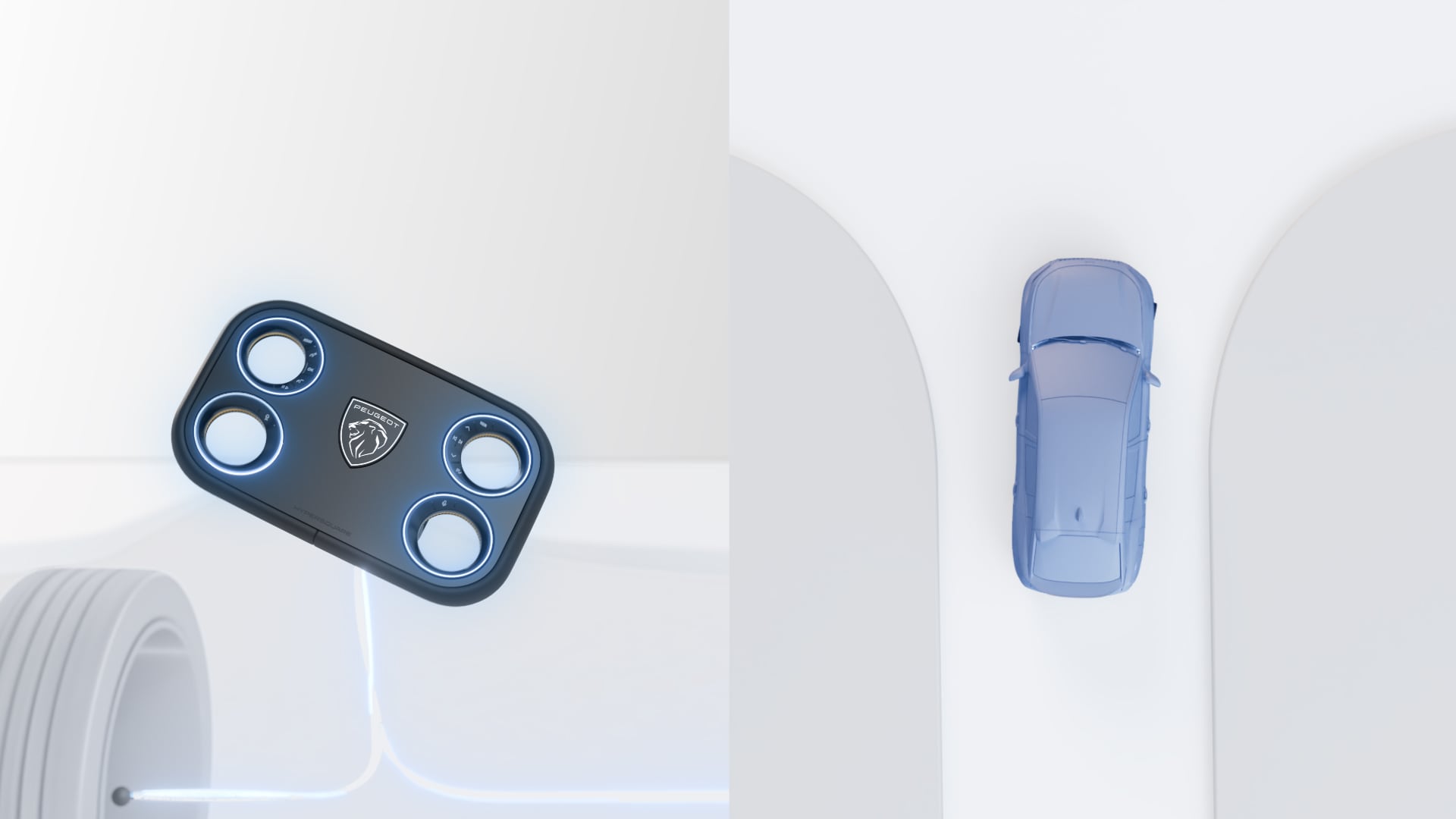
Some drivers may expect an electronic steering system to feel filtered or artificial because there is no mechanical column carrying forces directly from the road to the hands. That concern should be addressed rather than dismissed. In steer-by-wire, road feel is recreated through sensors, software and a force-feedback actuator. We designed the system to provide a natural and precise feeling, with useful information from the road but without unwanted vibration. The system can filter disturbances while retaining feedback about the vehicle’s response and road conditions. Different driving modes can also adjust the steering character within the approved calibration. Each driver will form a personal view of what feels natural.
How do we make steer-by-wire relevant to everyday drivers?
Advanced technology becomes meaningful when its benefits are felt every day. Fewer steering movements, easier manoeuvres and smooth high-speed control make steer-by-wire simple to understand from behind the wheel.
With PEUGEOT Hypersquare®, we turn an advanced steering architecture into benefits that drivers can experience in everyday situations. Its value goes beyond a futuristic shape or a specialist performance feature: fewer hand movements when parking, easier low-speed manoeuvres, stable response at higher speeds, accessible controls and a more open cockpit layout.
This is how we make the technology relevant to a broad range of drivers. Drivers do not need to understand actuator architecture or variable-ratio algorithms before using the system. They need a predictable response, clear guidance during the first drive and confidence that the technology has been validated for everyday roads, repeated use and different driving profiles.
PEUGEOT Hypersquare® translates Steer-by-Wire technology into practical changes behind the wheel: fewer steering movements, a response that adapts to speed and key controls within reach of the thumbs.
How you will approach your first drive with PEUGEOT Hypersquare®
- Adjust the seat and mirrors before focusing on the new steering control.
- Place both hands comfortably on the outer rim and keep your grip relaxed.
- Begin with small steering inputs in an open, low-speed environment.
- Practise a left turn, a right turn and a controlled U-turn.
- Try a parking manoeuvre to experience the reduced rotation.
- Notice how the reduced steering range limits the need for successive hand-over-hand movements.
- Allow the control to return progressively and reposition one hand if this feels more natural during a tight manoeuvre.
- Assess your impressions across several driving situations rather than after the first steering input alone.
What to expect from your first drive with PEUGEOT Hypersquare®
Precision and stability with Steer-by-Wire
A new steering gesture deserves a new kind of connection with the road. PEUGEOT Hypersquare® combines a compact steering control with Steer-by-Wire technology to deliver agility at low speeds, precision through bends and a stable, composed response as the pace increases.
How is steer-by-wire safety engineered?
Confidence begins long before the first turn. With PEUGEOT Hypersquare® and Steer-by-Wire technology, we build safety into every stage of development, from initial risk analysis and system design through to vehicle testing and regulatory approval.