

October 2026
How is steer-by-wire safety engineered?
Confidence begins long before the first turn. With PEUGEOT Hypersquare® and Steer-by-Wire technology, we build safety into every stage of development, from the first risk analysis to vehicle testing and regulatory approval.
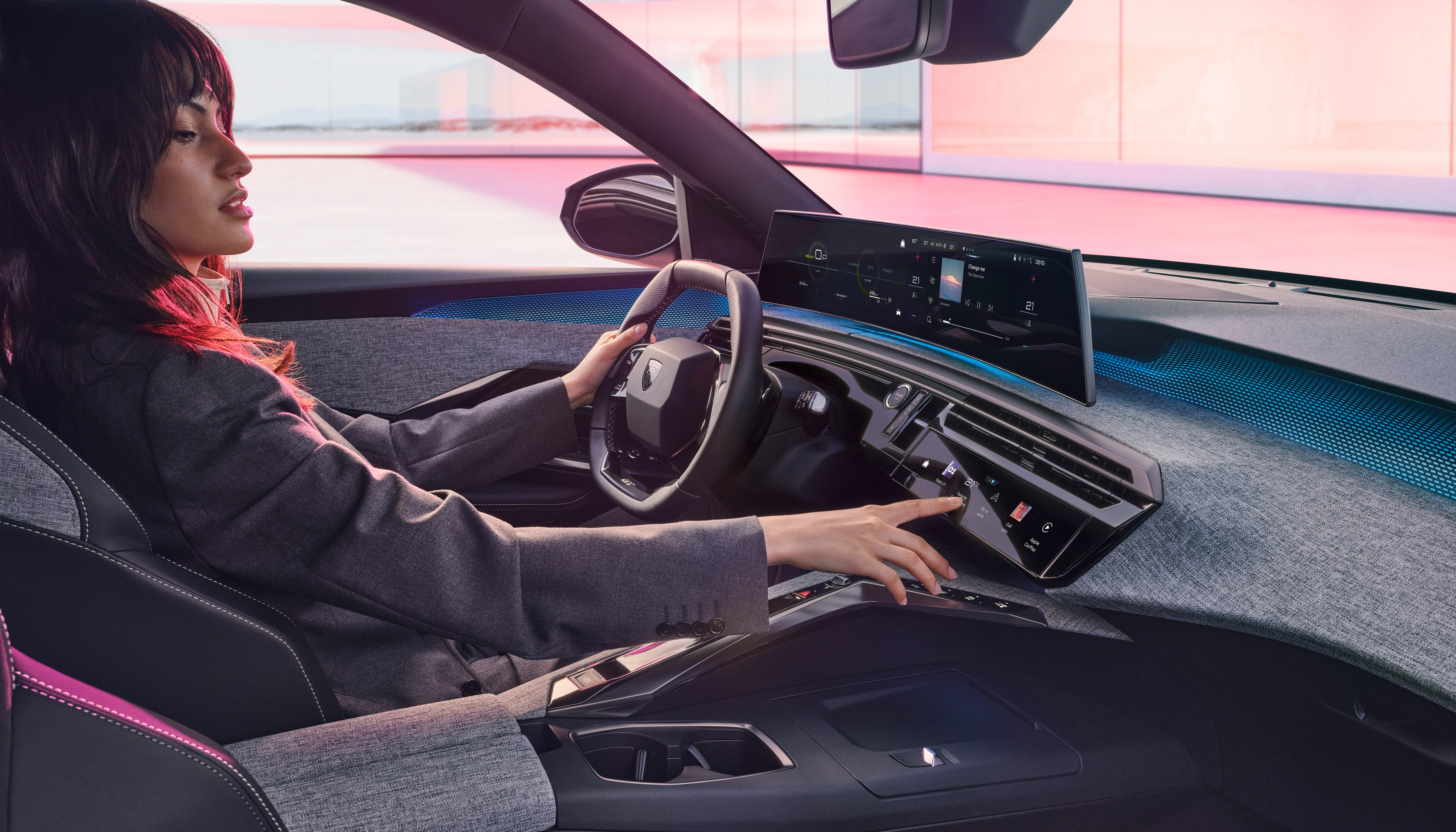
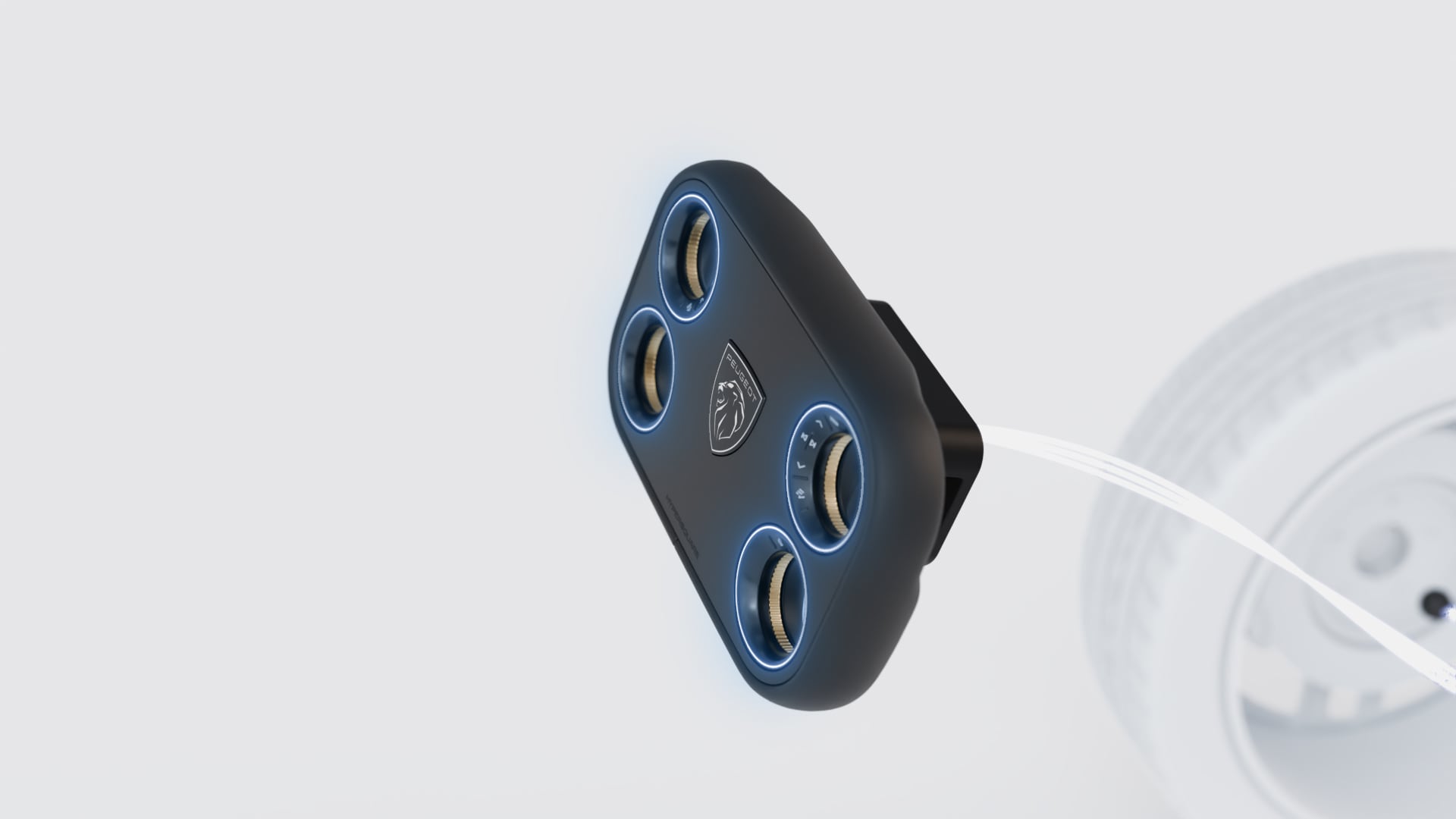
PEUGEOT Hypersquare® introduces a new, more agile steering gesture. Behind its distinctive patented design, our Steer-by-Wire technology measures the driver’s input electronically and translates it into movement at the road wheels. This new architecture allows us to rethink the driving experience whilst maintaining the rigorous safety objectives expected of a steering system.
Safety does not depend on one component working alone. We develop the complete steering chain around several complementary layers: precise requirements, monitored signals, fault detection, suitable redundancy, controlled electrical power, extensive testing, cybersecurity and European vehicle approval.
How is steer-by-wire safety engineered
Every steering movement begins with the driver and ends at the road wheels. Our role is to make that complete journey precise, predictable and continuously monitored.
Before we define the final components, our engineers identify the situations that could affect steering behaviour. What happens if a signal is inconsistent? How should the vehicle respond if an electronic function becomes unavailable? Which information must be checked more than once? These questions become safety requirements for the whole system.
This approach is known as functional safety. ISO 26262 provides the general automotive framework used to identify risks and translate them into requirements, tests and traceable evidence throughout the development lifecycle. ISO 19725:2026 complements this framework with system-safety guidelines specifically developed for Steer-by-Wire systems in passenger cars and light commercial vehicles.
Our Steer-by-Wire safety architecture was developed before ISO 19725 was published. The experience gained through this development also contributed to the wider industry work behind the new standard, alongside other automotive manufacturers and suppliers.
How does the system check every steering request?
One gesture from the driver sets several coordinated functions in motion. The system interprets the request, moves the road wheels and checks that the expected response is taking place.
Sensors read the movement applied to the PEUGEOT Hypersquare®. Electronic control functions process that information, whilst steering actuators create the corresponding road-wheel movement. A feedback function provides the steering effort and useful information felt through the control.
Throughout this process, monitoring functions can check whether signals remain plausible, communications arrive correctly, actuators reach the expected position and electrical conditions remain within the required range. These checks allow an inconsistency to be identified and managed as part of the validated safety strategy.
Essential to understand
Replacing the traditional mechanical steering column does not remove the safety chain. It creates an electronic chain that we design, monitor, test and validate as one complete vehicle function.
Why does redundancy matter in steer-by-wire?
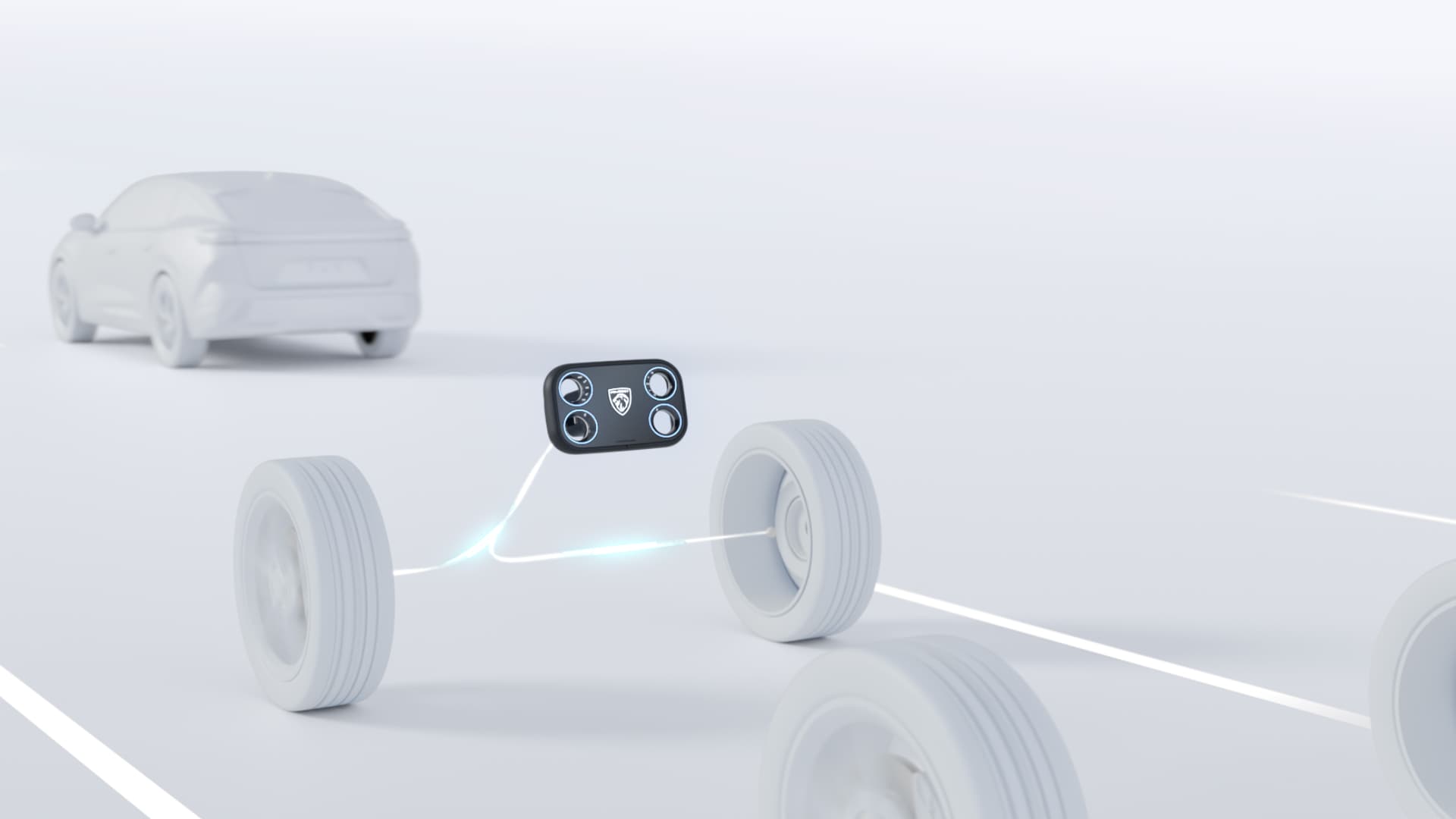
Redundancy allows the steering function to remain available when a critical component becomes unavailable. Instead of relying on one sensor, one actuator or one control path, our Steer-by-Wire system uses independent equipment and information paths for its safety-critical functions.
This approach follows a redundancy philosophy inspired by safety-critical aerospace control systems. Critical steering functions are supported by independent paths so that the loss of one component or branch does not immediately result in the loss of steering control.
More than one measurement helps confirm the driver’s request and the response of the road wheels. The system continuously compares relevant information so that it can identify a signal or component that no longer behaves as expected. Our engineers also assess independence between the redundant elements. Two components cannot provide effective redundancy if they can both be affected by the same connection, power supply or environmental event. The architecture is therefore designed to reduce common-cause failures and to supervise the two branches independently. Redundancy works together with monitoring and fault management. It maintains the availability of the steering function after a detected failure, whilst the vehicle activates the appropriate safety response to protect the remaining operational path.
What happens if a component fails?
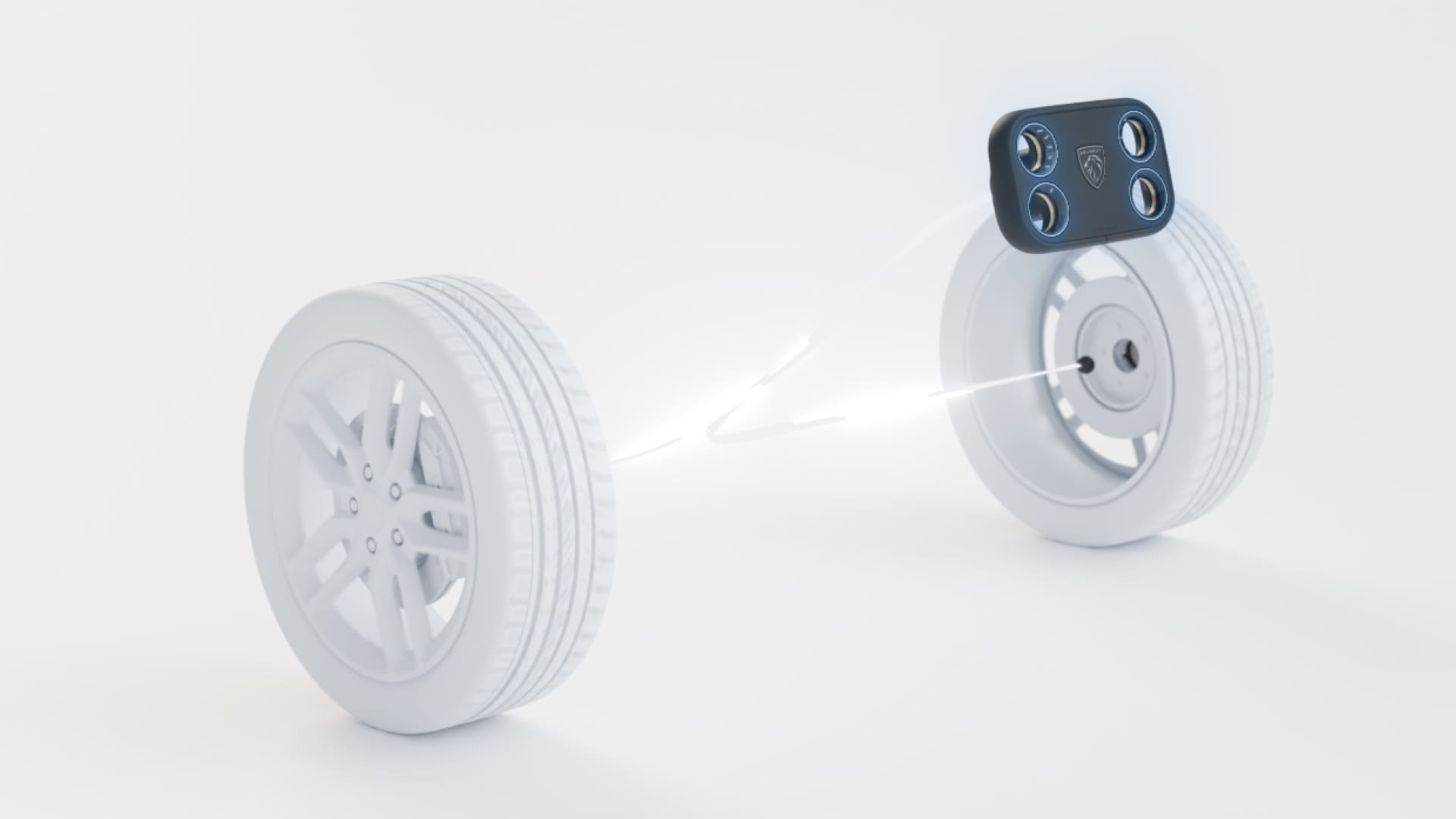
The Steer-by-Wire system is organised around two independent branches for safety-critical steering functions. Each branch includes the hardware and information paths required to support steering operation across the defined range of customer use cases. A supervisor monitors their operation and prevents one branch from issuing a command that conflicts with the other. If a component in one branch becomes unavailable, the system detects the fault and isolates the affected path. The independent branch remains available to maintain the steering function whilst the vehicle initiates its validated safety response. This response is designed to protect the remaining redundancy. Depending on the detected condition, the driver may receive a warning and the vehicle may progressively enter a controlled safety state. The objective is not to continue driving normally without limitation, but to preserve steering control and allow the situation to be managed safely.
Essential to understand
Hardware redundancy means that a single critical component is not the only means of maintaining the steering function. Independent equipment, continuous monitoring and a defined vehicle response work together if one component becomes unavailable.
What happens if the system detects an inconsistency?
Once a fault has been detected and the affected path identified, the vehicle activates the response defined for that condition. Monitoring, driver information and vehicle behaviour are coordinated so that the situation remains controlled.
A fault does not always have the same effect. Depending on the condition identified and the validated safety strategy, the vehicle may display a warning, limit a function, adapt the steering response or ask the driver to stop safely. We define these responses during development and verify them under controlled conditions. Driver information is part of the same process: warning messages, guidance and vehicle behaviour must remain consistent so the driver understands when attention or action is required.
How the safety layers work together
| Safety layer | Its role |
|---|---|
|
|
|
|
|
|
|
|
|
|
|
|
|
|
|
|
|
|
|
|
|
How do we test Steer-by-Wire technology before it reaches the road?
Before the first customer drive, we challenge the system through normal journeys, demanding environments and carefully controlled fault scenarios.
Testing begins in digital and simulated environments. Software functions can be assessed before the complete vehicle exists. Electronic control units can then be connected to test benches that reproduce vehicle signals and introduce controlled faults. Sensors, actuators and power electronics are also evaluated for performance, endurance, temperature, vibration and electrical disturbances. Complete vehicle validation introduces the situations drivers encounter every day: parking, urban manoeuvres, open roads, motorway speeds, different loads, temperatures and road surfaces. Our teams also reproduce the fault conditions identified during the safety analysis to verify warnings and any defined controlled operating state.
The EU publication of UNECE Regulation 79 issued in 2024 incorporates valid text up to Supplement 6 to the 04 series of amendments, which entered into force on 10 January 2024.
The European approval complements our wider validation programme.
What must PEUGEOT Hypersquare® demonstrate in Europe and Great Britain?
PEUGEOT Hypersquare® makes the innovation visible, but approval assesses the complete steering function behind it.
The safety demonstration covers more than the shape held by the driver. It considers sensing, software, electronic control, communications, steering actuation, electrical supply, monitoring, warnings and the way these elements are integrated into the vehicle.
The validation programme combines regulatory testing, functional-safety verification, endurance and environmental trials, electromagnetic compatibility, software verification, diagnostics, controlled fault injection and complete-vehicle testing. A distinctive steering control does not bypass the approval process. Approval of PEUGEOT Hypersquare® confirms that the complete approved vehicle implementation has demonstrated compliance with the steering requirements applicable to road use.
What does European approval mean for PEUGEOT Hypersquare®?
European approval confirms that the PEUGEOT implementation of Hypersquare® with Steer-by-Wire technology has completed the applicable assessment process for its approved vehicle definition.
Also, UN Regulation No. 79 establishes uniform provisions for steering equipment, including construction, testing, conformity of production and the safety aspects of electronic control systems.
Regulation (EU) 2018/858 provides the wider EU framework for whole-vehicle type approval and market surveillance. Together, these rules create the process through which a specific Steer-by-Wire implementation can be approved for European roads.
The approval concerns the complete PEUGEOT vehicle implementation rather than steer-by-wire as a generic technology. It reflects the documentation, testing and compliance evidence associated with the approved design and its intended European markets.
Is steer-by-wire authorised in the UK?
The PEUGEOT Hypersquare® and Steer-by-Wire implementation has received European Union type approval as part of its approved vehicle application. This approval confirms that the system has met the applicable requirements for its approved vehicle implementation, opening the way for the technology to reach European and UK roads.
Steer-by-wire is not excluded simply because it replaces a traditional mechanical steering link with electronic control. The UK applies the European vehicle type-approval framework and participates in the UNECE system covering UN Regulation No. 79 on steering equipment. Regulation (EU) 2018/858 provides the wider framework for vehicle approval and market surveillance in the European Union.
Approval applies to the documented PEUGEOT vehicle implementation presented for assessment. It confirms compliance with the requirements applicable to that approved technical definition and its intended European market introduction.
Which European rules govern steer-by-wire?
| Framework | What it covers |
|---|---|
|
|
|
|
|
|
|
|
|
|
|
|
|
|
|
|
|
|
Source: ISO 19725:2026, Road vehicles — Steer-by-Wire systems — System safety guidelines
The applicable amendment series, transition dates and detailed requirements depend on the vehicle category, approval date, market and approved technical definition.
Why is cybersecurity part of steer-by-wire safety?
When steering becomes more electronic, protecting software, communications and updates becomes part of protecting the driving experience.
UN Regulation No. 155 establishes requirements concerning vehicle cybersecurity and cybersecurity management systems. It requires manufacturers to identify cyber risks, implement appropriate measures and manage those risks across the vehicle lifecycle.
UN Regulation No. 156 addresses software updates and software update management systems, supporting controlled software versions and updates where changes can affect safety, compliance or approved vehicle characteristics.
This regulatory framework allows us to manage cybersecurity risks and software changes throughout the vehicle lifecycle, without exposing the sensitive technical measures that protect the system.
Safety engineered from the first requirement to the first drive
PEUGEOT Hypersquare® makes a new driving experience possible. Behind every steering gesture lies a complete process to identify, design, monitor, test, protect and demonstrate.
For drivers, the outcome should feel natural: a steering system that responds consistently, communicates clearly and supports confidence on everyday roads. Reaching that point brings together our engineering teams, suppliers, test facilities, technical services, approval authorities and cybersecurity specialists.
Steer-by-wire safety is not defined by one claim or one backup component. It is built throughout the vehicle programme, from the first safety objective to development, approval, production and life on the road.
Your first drive with Hypersquare
A new and exciting way to drive begins with a simpler gesture. PEUGEOT Hypersquare® combines reduced steering movement, intuitive control and speed-adaptive precision to make every journey feel more agile and engaging.
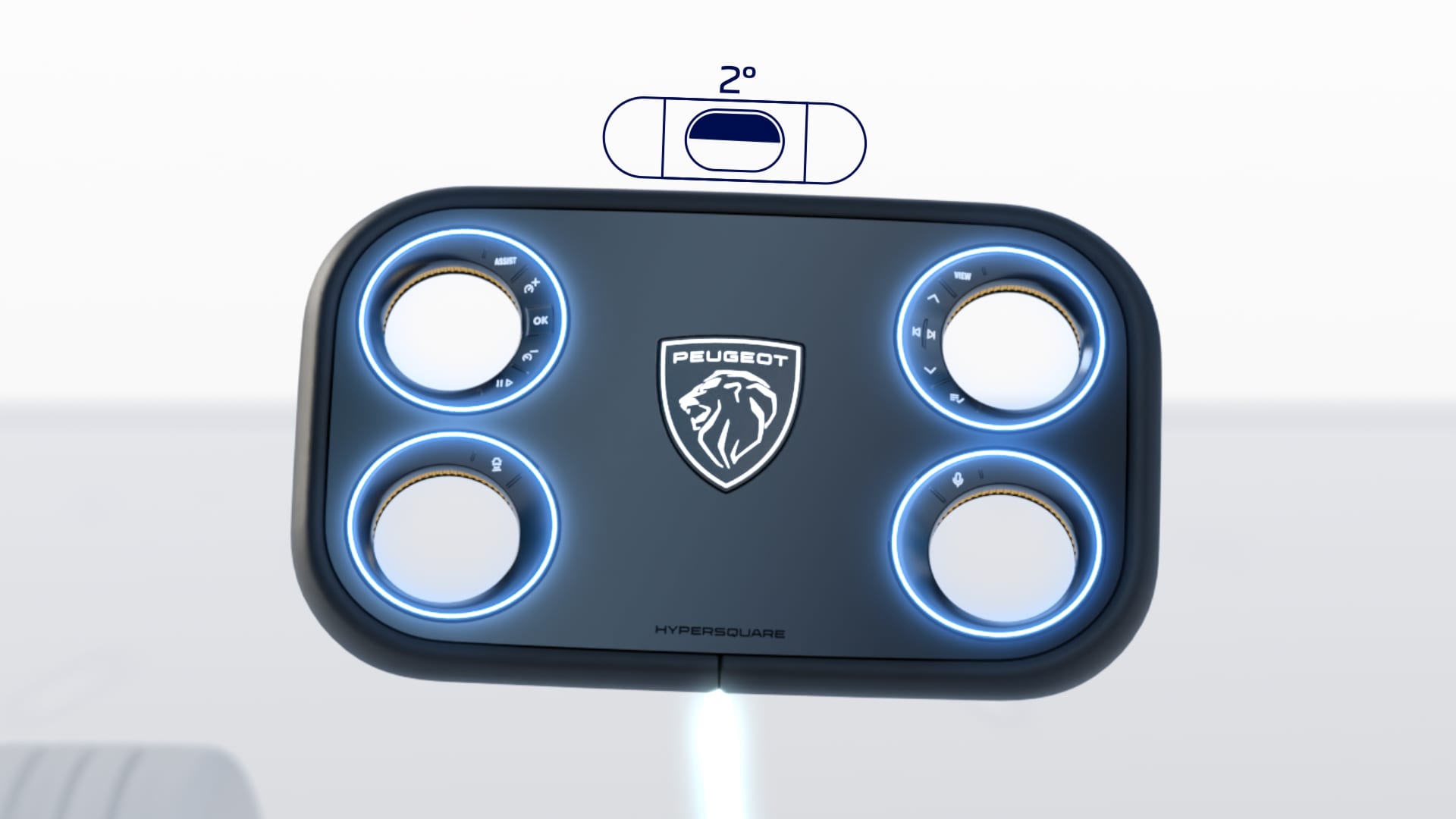
Precision and stability with Steer-by-Wire
A new steering gesture deserves a new kind of connection with the road. PEUGEOT Hypersquare® combines a compact steering control with Steer-by-Wire technology to deliver agility at low speeds, precision through bends and a stable, composed response as the pace increases.