

October 2026
Road feel, precision and stability with Steer-by-Wire
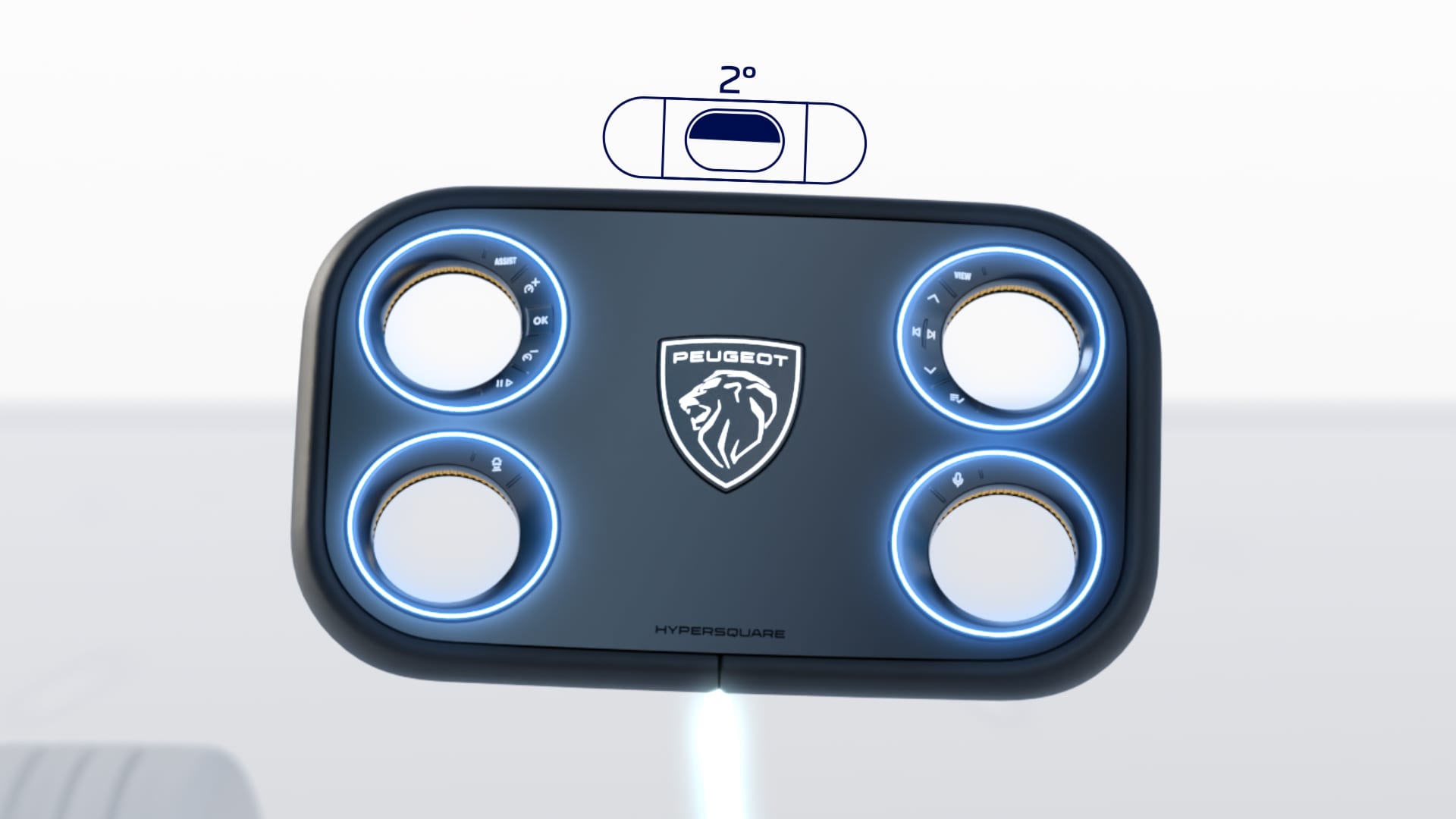
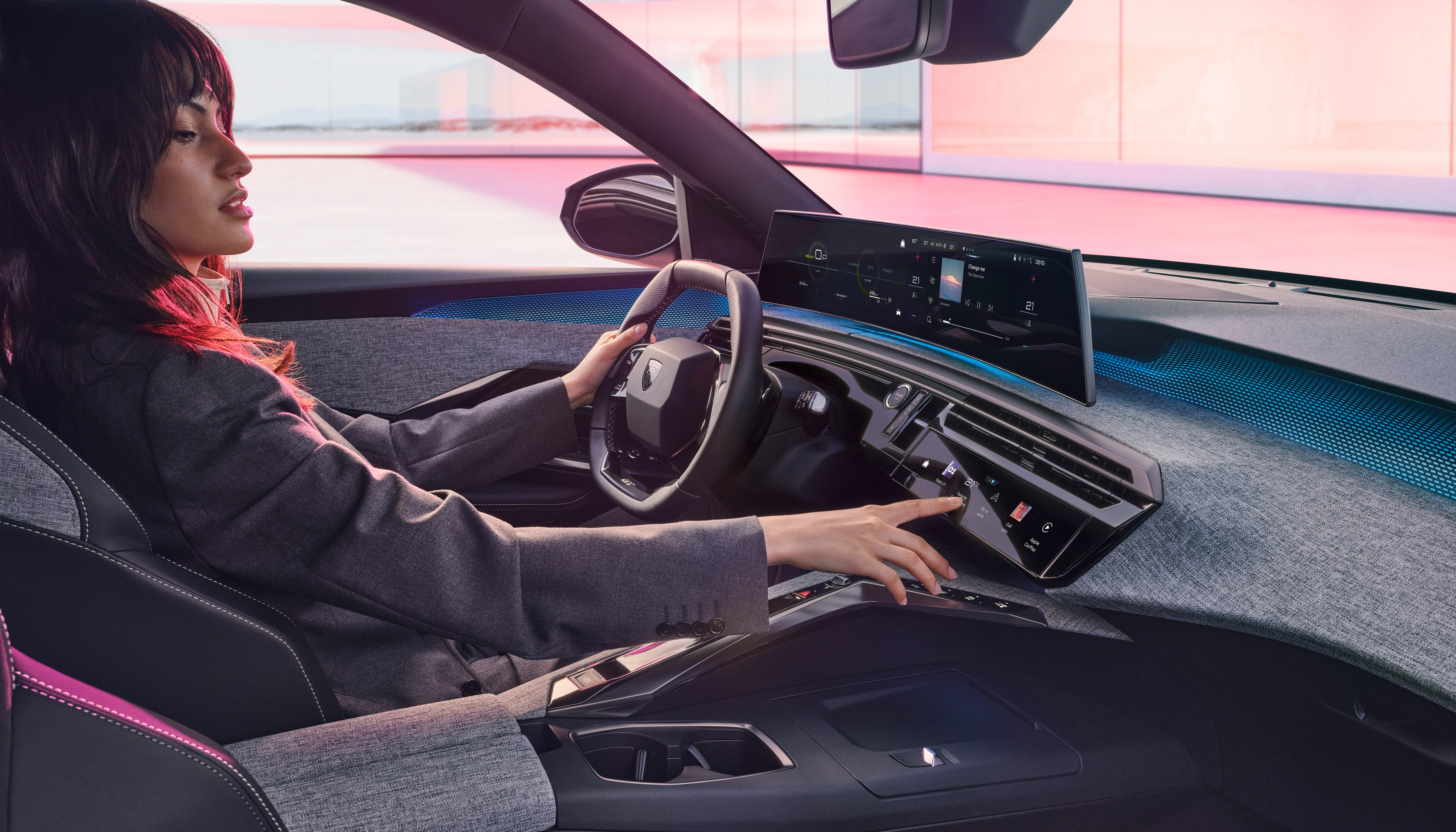
With no mechanical steering column between the driver’s hands and the road wheels, our patented electronic steering architecture gives us greater freedom to calibrate steering response and force feedback. The result is not about removing sensation, but about selecting and delivering the information that helps the driver place the car, understand its response and build confidence on different roads.
This balance comes from two closely connected functions. A variable steering ratio continuously adapts the relationship between the movement of PEUGEOT Hypersquare® and the angle of the road wheels according to vehicle speed. Force feedback creates the steering effort and communicates the useful road information felt by the driver, whilst filtering unwanted vibrations caused by uneven road surfaces. Together, these functions create a steering experience that evolves naturally and intuitively with speed and driving conditions.
One steering system, several driving characters
Behind this calibrated driving experience is a secure electronic architecture developed with a redundancy approach inspired by safety-critical aerospace control systems.
PEUGEOT Hypersquare® combines the agility drivers appreciate in daily manoeuvres with the precision and stability expected on faster roads.
At low speeds, the steering ratio is direct and the movement remains compact. Through bends, the response becomes more measured and the feedback builds with the manoeuvre. On a motorway, the ratio is calibrated for fine, precise corrections, whilst the steering effort feels more settled.
This range of behaviour is made possible by the connection between variable steering ratio and force feedback. One determines how the road wheels respond to the driver’s movement. The other determines the effort and information felt through the PEUGEOT Hypersquare®. Together, they create a steering experience that feels agile without becoming abrupt, informative without transmitting unnecessary disturbance, and precise without losing the stability drivers expect at speed.
Depending on the selected driving mode, the calibration adjusts both the speed-adaptive steering ratio and the force feedback to create a more relaxed or more dynamic steering character. Each mode follows its own ratio calibration, whilst the response continues to evolve smoothly, intuitively and consistently with vehicle speed.
What does PEUGEOT Hypersquare® feel like on the road?
Direct when agility matters, precise when stability matters: PEUGEOT Hypersquare® gives each steering input a clear purpose.
The first difference comes from the reduced steering range enabled by Steer-by-Wire technology. PEUGEOT Hypersquare® rotates up to 170° in either direction, allowing the full road-wheel steering range to be reached without the successive rotations associated with a conventional steering system. Most inputs remain within the natural grip zones, whilst drivers can reposition one hand once during the tightest manoeuvres if this feels more comfortable.
For a closer look at the first steering inputs, hand position and adaptation process, discover what to expect from your first drive with PEUGEOT Hypersquare®. That compact movement does not mean the vehicle reacts in the same way at every speed. Steer-by-Wire technology separates the driver’s input from a fixed mechanical ratio. We use that freedom to provide a direct response during low-speed manoeuvres and a more measured response on faster roads. The steering effort evolves too. At low speeds, the control feels light enough for easy movement. As speed increases, force feedback adds weight and precision, helping the driver make smaller, measured adjustments.
Why does steering response change with speed?
One steering ratio cannot be equally well suited to a parking space and a fast open road. Steer-by-Wire technology adapts the response to each situation.
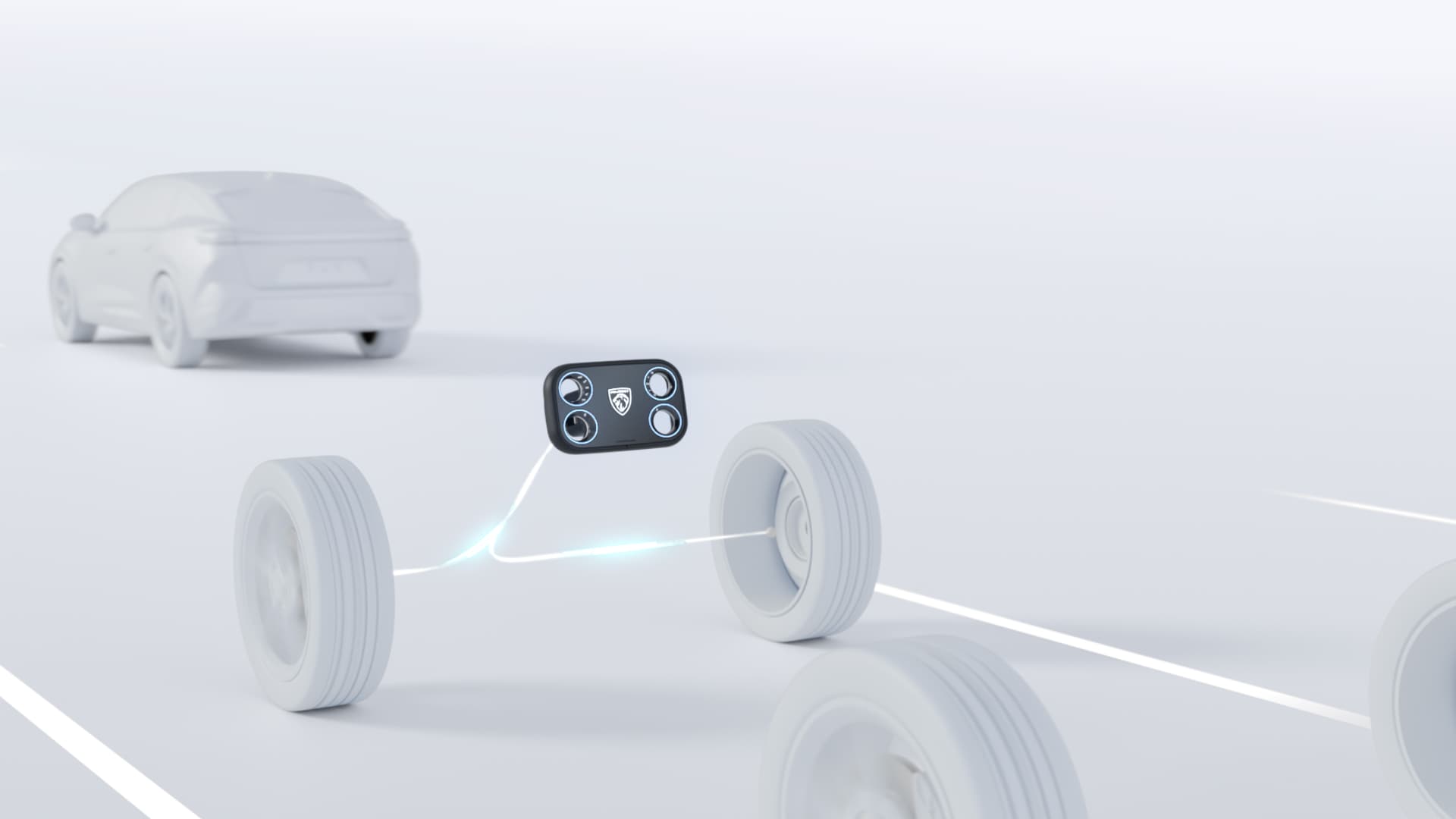
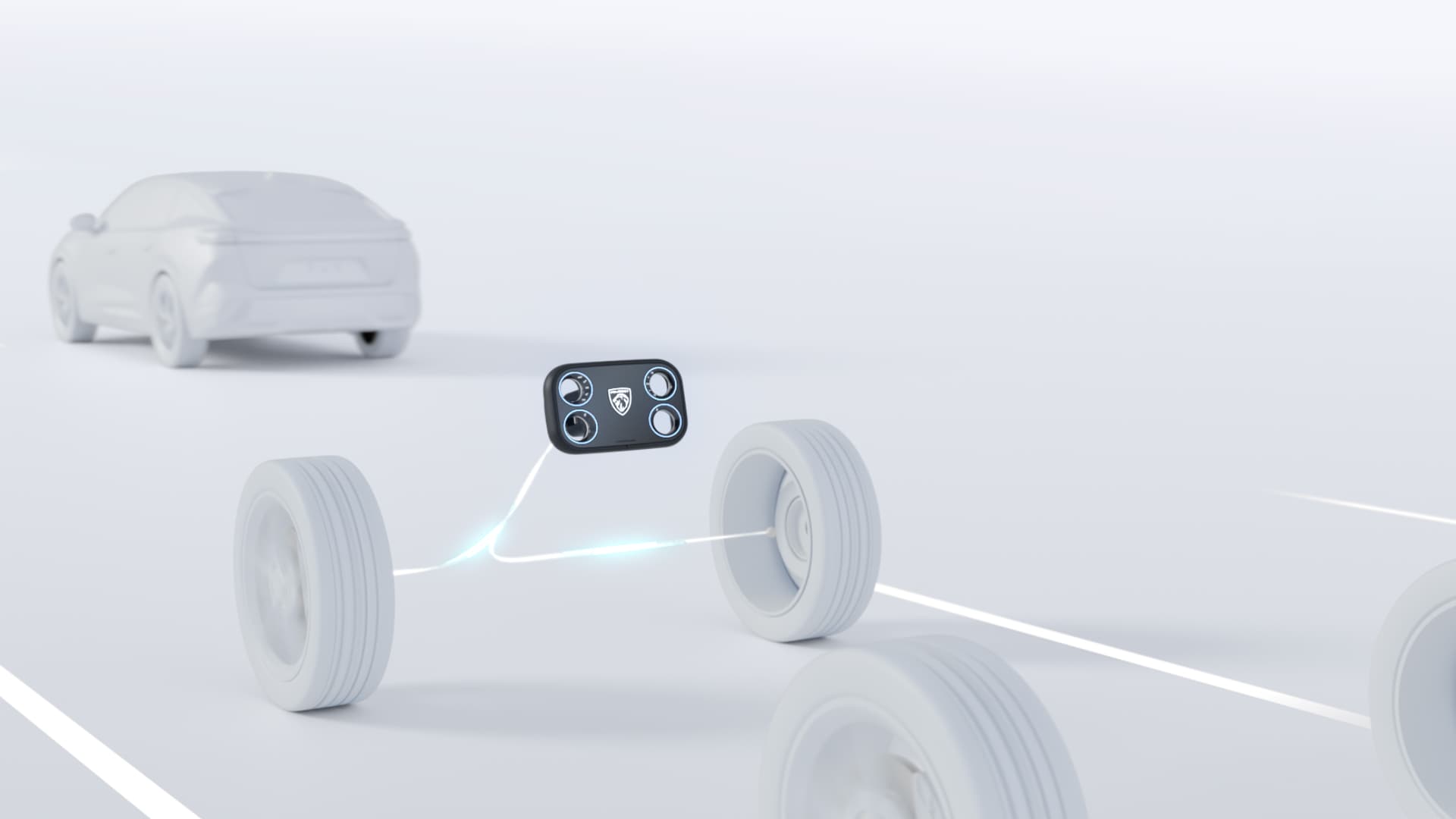
In a conventional mechanical system, the relationship between steering-wheel movement and road-wheel angle is largely defined by the steering hardware. With Steer-by-Wire technology, sensors measure the movement of PEUGEOT Hypersquare®, electronic control functions interpret the request and actuators position the road wheels.
At low speeds, a more direct ratio produces the required road-wheel angle from a smaller movement of the hands. This reduces the rotation needed during tight manoeuvres and keeps the gesture compact. As speed rises, the ratio becomes less direct, so the same movement produces a smaller change in road-wheel angle, supporting fine corrections and a stable, settled trajectory.
Essential to understand.
Variable ratio does not mean unpredictable steering. Within the selected driving mode, the response follows a calibrated relationship with vehicle speed so that it evolves progressively and consistently as driving conditions change.
What changes during low-speed manoeuvres?
At low speeds, PEUGEOT Hypersquare® turns confined movements into short, deliberate steering inputs.
A direct ratio reduces rotation at low speed, whilst the speed-calibrated response supports fine control and vehicle stability as the pace increases.
Force feedback remains part of the experience. The control provides steering effort as the manoeuvre develops, helping the driver measure the input rather than simply moving an ultra-light control with little information.
Why can Steer-by-Wire technology reduce steering movements?
Steer-by-Wire technology replaces large rotations with a shorter operating range, bringing the driver’s steering gesture closer to the response of the vehicle.
Because the steering ratio is created electronically, full road-wheel movement does not require several turns of the steering control. Associated with Steer-by-Wire technology, PEUGEOT Hypersquare® covers its operating range within 170° in either direction, greatly reducing the need for successive hand repositioning.

The benefit is not speed for its own sake. A smaller gesture reduces unnecessary arm movement and makes the relationship between input and vehicle response easier to follow. As the vehicle accelerates, the speed-adaptive calibration makes the response less direct, supporting precise control and vehicle stability.
The shorter operating range is enabled by Steer-by-Wire technology. The distinctive geometry of PEUGEOT Hypersquare® makes this new relationship between movement and response immediately visible and helps drivers adopt the new steering gesture.
How does force feedback create a connection with the road?
Steer-by-Wire removes the mechanical column, not the conversation between the car and the driver. Force feedback recreates the steering effort and useful information felt through PEUGEOT Hypersquare®.
A dedicated feedback actuator generates resistance at the control. Its calibration can take account of steering input, vehicle speed and the dynamic state of the vehicle. This allows the effort to remain lighter during manoeuvres and become stronger and more settled as speed increases.
The freedom to calibrate feedback also allows us to separate useful information from disturbance. The objective is not to reproduce every vibration that might travel through a mechanical steering column. It is to communicate the forces and changes that help the driver understand the vehicle’s response.
Road texture, tyre loading and cornering forces all contribute to the driving experience. We translate the most relevant information into a consistent level of effort, avoiding both extremes: complete isolation on one side and unnecessary disturbance on the other.
| Driving situation | Steering response | Force feedback |
|---|---|---|
|
|
|
|
|
|
|
|
|
|
|
|
|
|
|
|
Can electronic steering feel artificial?
Electronic steering feels different because the feedback is created deliberately rather than transmitted through a mechanical column. Our calibration turns that freedom into a consistent and informative driving experience.
A mechanical system passes forces through physical components, but it also transmits vibration, kickback and disturbances that do not always help the driver. Steer-by-Wire technology allows us to choose how steering effort builds, how the straight-ahead position feels and how road information develops through a bend.
The aim is not to imitate a conventional steering system component by component. PEUGEOT Hypersquare® creates a new relationship between gesture, effort and vehicle response. The steering ratio and force feedback are calibrated together to maintain a coherent response, whist the available driving modes can adjust the steering character through their dedicated calibrations.
The driver still feels a changing level of effort as the vehicle moves from a low-speed manoeuvre to a faster bend. What changes is the way that information is produced and refined before it reaches the hands.
Essential to understand
A filtered steering feel is not an absent steering feel. Steer-by-Wire technology removes unwanted disturbance whilst preserving the effort and dynamic information needed to guide the vehicle accurately.
How does Steer-by-Wire technology support steering precision?
Precision begins with accurate input and ends with a response the driver can read. Steer-by-Wire technology connects both through continuous electronic control.
Sensors measure the direction and extent of the driver’s movement. The control system converts that request into the appropriate road-wheel angle, whilst monitoring the steering function throughout the manoeuvre. This allows the response to be tuned around the intended vehicle behaviour rather than a single fixed mechanical relationship.
Through a bend, precision comes from the balance between response, effort and progression. An initial movement should place the vehicle clearly, whilst subsequent corrections should remain measured and predictable.
Reduced rotation also supports precision by keeping the driver’s hands within a more consistent area of the control. The driver can apply an input, hold the chosen angle and return the steering with a continuous movement, with far less needed for repeated hand repositioning.
How does PEUGEOT Hypersquare® respond through bends?
From the first turn-in to the exit of the bend, precision comes from a response that builds clearly rather than arriving all at once.
As the driver moves the PEUGEOT Hypersquare®, the variable ratio translates the input into the road-wheel angle best suited to the vehicle’s speed. Force feedback builds with the manoeuvre, providing resistance that helps the driver judge the chosen steering angle and the vehicle’s response.
On a sequence of bends, the reduced operating range keeps hand movement compact. The driver can change direction without large rotations, whilst the speed-calibrated ratio supports measured transitions from one steering angle to the next.
This combination makes the vehicle feel agile without making the steering feel nervous. Directness and stability are not opposing settings: they are different parts of the same speed-adaptive calibration.
How does PEUGEOT Hypersquare® support stability on faster roads?
At speed, confidence comes from calm, measured responses. The speed-adaptive steering ratio allows the driver to make fine corrections, whilst force feedback remains settled and precise.
The speed-adaptive ratio reduces sensitivity around the straight-ahead position compared with the direct response used at low speeds. Small hand movements therefore produce measured road-wheel adjustments, supporting lane positioning and smooth direction changes.
Force feedback adds weight as speed increases. This provides a firmer reference around the central position and helps communicate the difference between a light correction and a deliberate change of direction.
Stability also comes from consistency. Within the selected driving mode, the steering ratio and force feedback evolve together with vehicle speed, creating one coherent response rather than separate changes in direction and effort.
Precision without isolation
PEUGEOT Hypersquare® does not place technology between the driver and the road. It uses technology to shape a clearer, more deliberate connection between them.
Steer-by-Wire technology gives our engineers the freedom to calibrate steering response and force feedback as one complete experience. The direct low-speed ratio reduces the movement required during manoeuvres, whilst the high-speed calibration provides a more measured response. Force feedback delivers the effort and useful road information that make each response easier to read.
The result is a new PEUGEOT steering signature: compact in movement, precise in response and stable as speed increases. A distinctive gesture, supported by calibration that keeps the driver at the centre of every turn.
Your first drive with Hypersquare
A new and exciting way to drive begins with a simpler gesture. PEUGEOT Hypersquare® combines reduced steering movement, intuitive control and speed-adaptive precision to make every journey feel more agile and engaging.
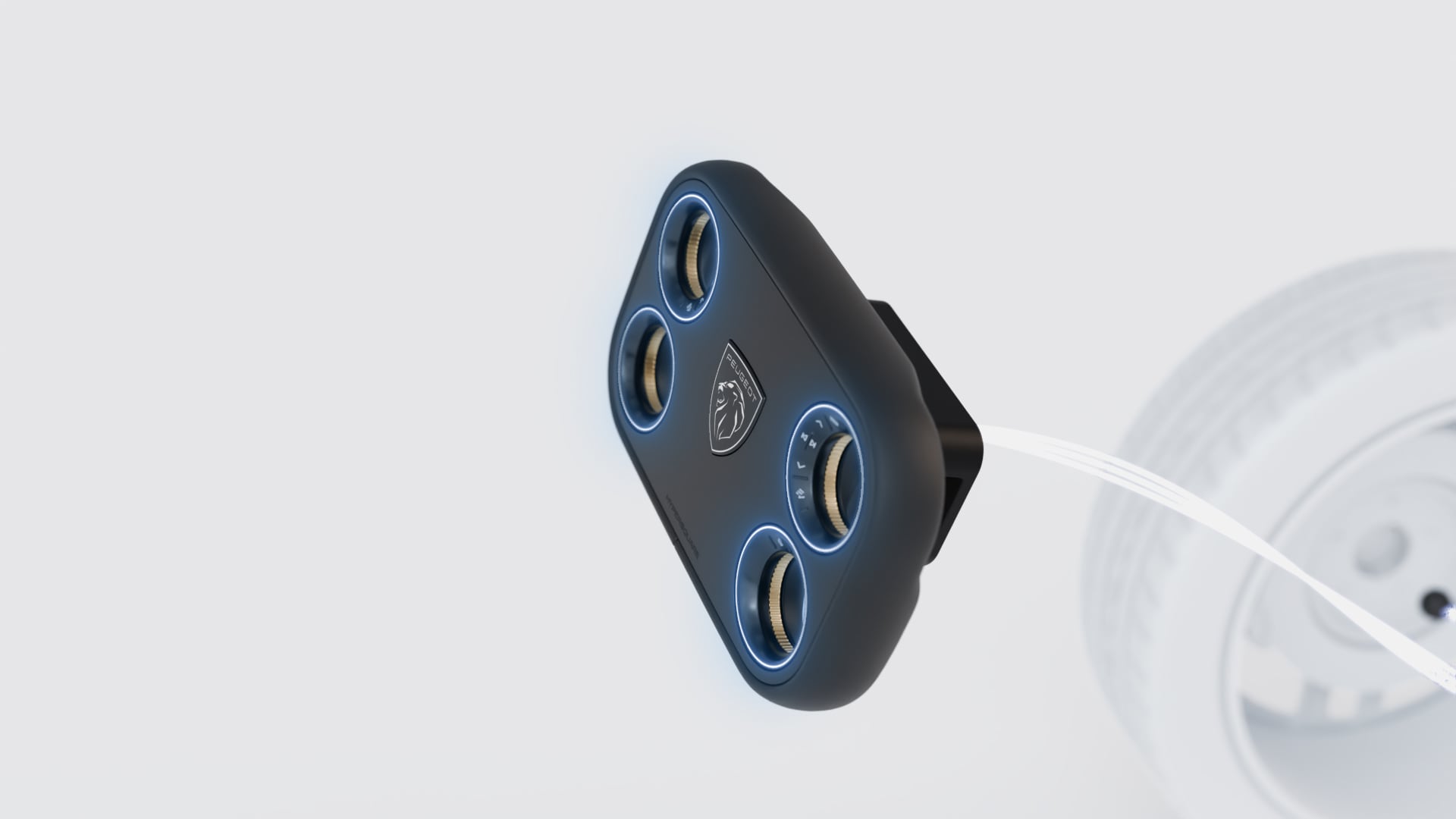
How is steer-by-wire safety engineered?
Confidence begins long before the first turn. With PEUGEOT Hypersquare® and Steer-by-Wire technology, we build safety into every stage of development, from the first risk analysis to vehicle testing and regulatory approval.