

September 2026
Your Essential Guide to electric vans in the UK: PEUGEOT E-PARTNER, E-EXPERT and E-BOXER
Choosing the right electric van can transform how your business works. This guide compares the PEUGEOT E-PARTNER, E-EXPERT and E-BOXER across range, payload, load space, charging and everyday practicality, helping you match the right model to your routes, workload and budget.
Why switch to an electric van in the UK?
A PEUGEOT electric van can help reduce tailpipe emissions, support smoother city driving and lower day-to-day running costs, depending on your mileage, charging access and electricity tariff.
Cost savings & running costs
Environmental benefits
With zero driving emissions, a PEUGEOT electric van is well suited to clean air zones and urban delivery routes. Quieter driving, reduced vibration and smoother acceleration can also make busy working days feel easier for drivers.
What should I look for when choosing an electric van?
Compare payload, daily mileage, available load space, workplace charging convenience and route types to pick the right electric van for your business.
Range & charging
Start with your daily mileage, then compare it with the WLTP range of the van you’re considering. Home or workplace charging will usually be most convenient, while public charging can support longer routes or occasional journeys outside your usual operating area.
Payload & practicality
Check payload, load space and seating against the tools, stock, racking and passengers you normally carry. Weight can affect real-world range, so choose a van with enough headroom for your busiest days, not just your average workload.
Leasing vs buying
Leasing can suit businesses that want fixed monthly payments, set terms and the option to upgrade regularly. Buying may be better if you plan to keep the van long term, cover high annual mileage or need permanent specialist conversions. Compare deposits, total cost, mileage limits, servicing, insurance and end-of-contract fees before deciding.
Which PEUGEOT electric van is best for UK businesses?
The best electric van depends on your routes, load requirements and charging routine. Use the range below as a starting point, then compare each model against your real working day.
Best for range
PEUGEOT’s electric van range supports everything from city deliveries to larger commercial operations:
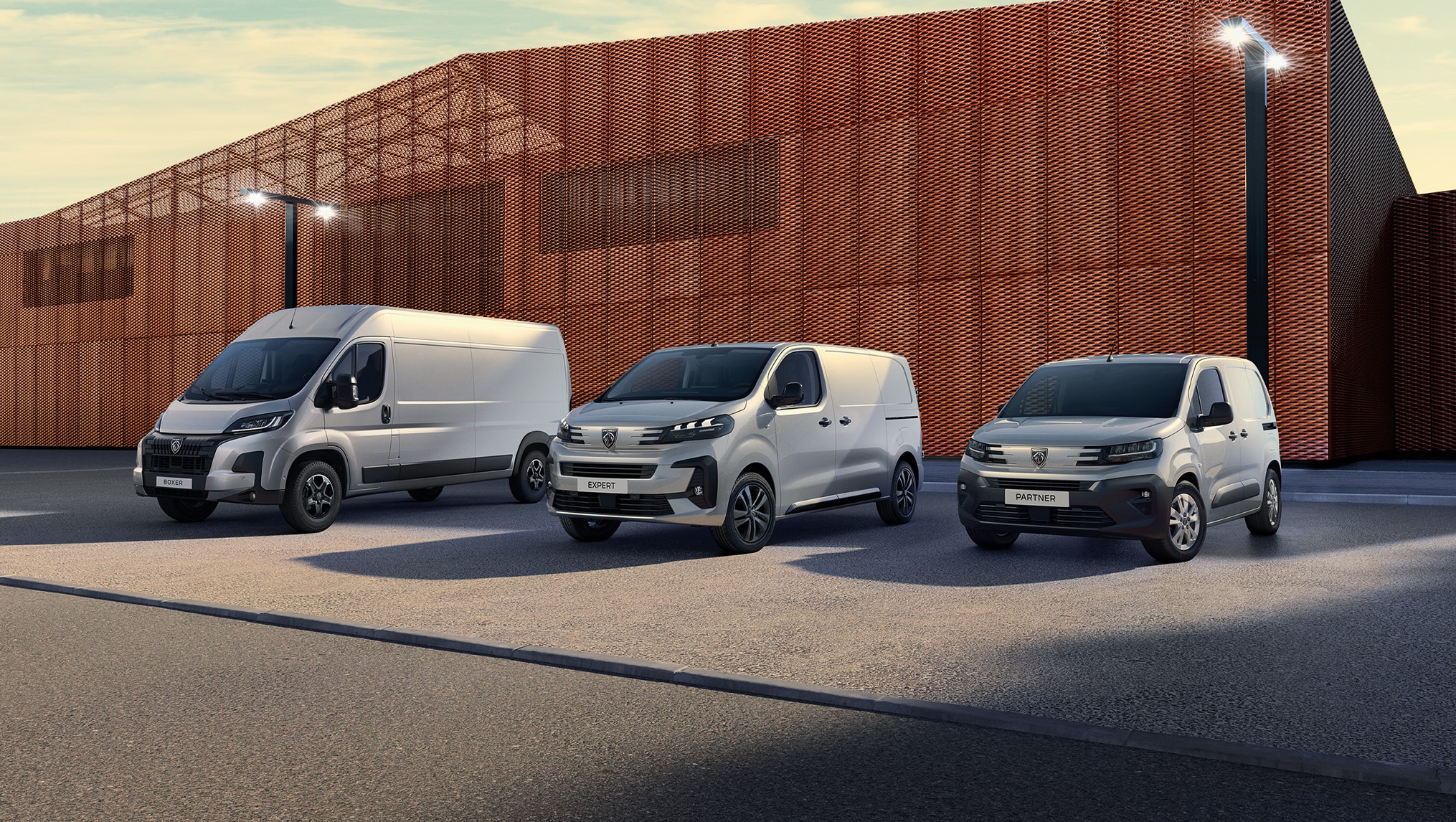
- The PEUGEOT E-PARTNER offers up to 213 miles WLTP(1), ideal for everyday deliveries and service visits.
- The PEUGEOT E-EXPERT offers up to 230 miles WLTP(2) for daily deliveries and regional journeys.
- The PEUGEOT E-BOXER offers up to 263 miles WLTP(3) for larger loads and multi-stop operations.
WLTP figures are for comparison only. Actual range varies by payload, speed, route, temperature, driving style and heating or air-conditioning use.
Best for city use
Best for value
Assess value through total cost of ownership, not purchase price alone. Include finance, electricity, servicing, insurance, charging infrastructure, payload and annual mileage.
Government support may be available, but schemes and eligibility can change. Check the latest GOV.UK guidance and current PEUGEOT Business offers before calculating savings.
Which electric van is best for my business?
Compare dimensions, load space, range and running costs to decide which PEUGEOT electric van fits your business.
PEUGEOT E-PARTNER: your compact van for everyday business
PEUGEOT E-EXPERT: your next job’s mid-size van
PEUGEOT E-BOXER: your fleet’s large van
The PEUGEOT E-BOXER is designed for large loads and high-volume operations. Available in four lengths, it offers up to 17m³ load space and up to 263 miles WLTP(3) range, making it a strong choice for logistics, construction, specialist conversions and commercial contracts.
What affects an electric van’s driving range?
Official WLTP figures are useful for comparing models, but real-world range depends on payload, speed, route, temperature, tyre condition, driving style and heating or air-conditioning use. To estimate likely range, compare official figures with your usual routes and typical load, then allow extra margin for traffic, detours and seasonal changes.